



Discussing Braces, Aligners, and Orthodontics
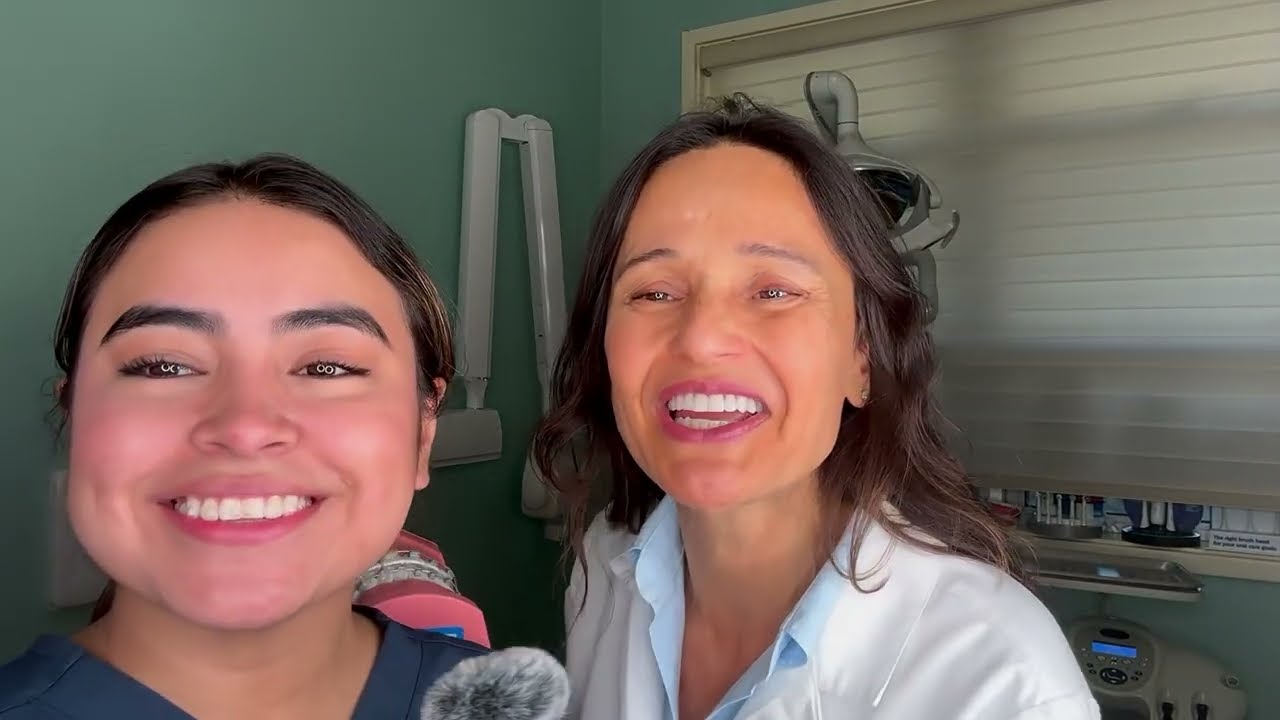
Orthodontics are devices used to straighten or align your teeth so you can look better, eat better, and speak better. Braces can come in metal forms, like metal brackets. If you're concerned about the metal showing through, you can sometimes use ceramics, and some kids like to have different color bands to make it fun.
There are also aligners. Aligners are clear trays that can be on your top and bottom teeth for all day wear. Naelli, one of our dental assistants, will show us her aligners and tell us about her experience. (See above video!)
How has your experience been with the aligners?
It's been really good. I don't feel any pain. At first, it feels uncomfortable, but then I get used to it after like two or three days.
Would you recommend aligners to people?
I actually would recommend it a lot because you can't see it unless you get super close to the person. So, nobody really knows that I have them.
At what age should children receive their first orthodontic evaluation?
A good age is around seven years old, but every kid is different. It's really when your first adult molars start popping up. You have the baby teeth, the baby molars. When you start seeing around kindergarten, six or seven years old, when the first adult molars start popping up, it's usually about the right time to have your first braces consultation, orthodontic consultation. Not necessarily to do braces right away, but just to start looking at your child and determining their needs, whether early intervention is needed or one round of braces later on is good enough.
If your child has a jaw discrepancy problem, like a very narrow arch from thumb sucking or sucking on a pacifier, it can be corrected through manipulation of special appliances. It can make the difference between having to do surgery later on. Once you're grown and your jaws have finalized in size, the amount of more conservative treatment, less surgical treatment, is reduced.
If you catch things earlier, you can correct things with orthodontic appliances without having to do surgery later on. If you treat someone in early childhood years or in the teen years when the child is still growing, the orthodontist can manipulate the growth and sizing of the jaws, so later on, surgery does not have to be mandatory to correct severe bite discrepancies. If you're an adult, you can still have braces, but if you have a big jaw discrepancy, like a jaw issue, surgery would be necessary. The best way to find out is to go to the orthodontist or come to the dentist so we can look at your jaw and your bite and let you know what is most likely involved.
Are there any other differences in the type of braces you choose?
Metal braces, like I just showed you, the ceramic braces, which are these kinds of plastic-looking things. The thing to know about the ceramics is that you can't really have coffee, tea, or curry as it stains them. That's something to keep in mind. If you do the metal ones, they don't stain. You can have your coffee, your tea, your curry, and you're fine. Interestingly enough, the aligners you just saw Naelli with, sometimes they can stain, but I haven't seen patients come in with a real issue. I don't think it's as much of an issue as with the clear ceramics.
The types of appliances used, whether you're going to do the ceramics, the plastic trays that you just saw Naelli show you. Every case is different. It depends on the complexity of your case, how hard the case is, how long the treatment's going to be, whether you're going to use the train track route, the orthodontic brackets, or the aligners like the clear trays, and where you live in the country because different parts of the country have different costs of living and the experience of the doctors.
How much do braces cost?
Certain doctors charge more for their experience. Most orthodontic practices do, and braces are not cheap; they are expensive. They can range in the thousands of dollars. Most practices will have you come in, look at your child or you as an adult, and do an initial assessment. If you're interested, they'll do a second evaluation. For that, you'll probably have to pay a couple of hundred dollars, like anywhere between $400 and $800, depending on what's involved, whether it's models or whether they ask you to take a CT scan, a three-dimensional X-ray.
If you decide to go ahead with braces after that second consultation, they'll usually have you put down a down payment. Depending on the case, they could have you put down $800, $1,000, or $2,000, and then you can have them charge your card or send a check every month for between $100 and $300. Every situation is different, but most orthodontic practices realize the costly investment in orthodontic treatment. They'll usually have you put a down payment and then work out monthly payments.
Insurance, if you have dental insurance, sometimes they cover them. Be aware that not all dental insurance covers braces or orthodontic treatment. It depends on the particular plan you obtain through your employer or purchase privately. They don't always pay it all in one shot. The dental insurance companies usually pay in increments, like every 3 to 6 months, until they're done covering their portion. Keep that in mind.
How do I choose an orthodontist?
One thing I personally experienced because I have three children who all had braces is whether you like the doctor, whether you feel that this doctor can help the needs of straightening or aligning your kid's bite and teeth, and whether your kid likes the assistants.
A lot of times people don't talk about this, but it's true. You go in, and who do you mostly see when you're at the orthodontist's office? You see the assistants and the financial coordinator at the front desk. Meet the financial coordinator. If you feel comfortable with the financial coordinator making arrangements for you and you have good communication in terms of the payment options, that's a great match for you. If you like the doctor, if you like the assistants, if your children seem to like the assistants because they're going to be interacting with them, and if you like the front desk and the payment coordinator, the financial coordinator.
How do advanced orthodontic techniques improve treatment outcomes?
There are some options out there where they can move teeth much faster, but be aware that you don't want to go so fast that you're compromising other things. Something people don't talk about, and this is really important, is when you're moving teeth really fast, you can recede your gum lines or your roots can shorten. In my practice, when you're in braces, I take X-rays of some of the roots once every six months to monitor if your roots are starting to shrink.
If they do, I let the orthodontist know, and they have to slow down the speed of how fast they move your teeth. The real outcome is that it can be very precise and efficient. If you're looking to have your teeth straightened quickly, make sure it's done without any permanent drawbacks like gum recession or shortening of your roots.
It can give you fast timing, but it has to be personalized, and every case is different. You may react well to moving your teeth very fast, while someone else may not. It could be very efficient in terms of moving your teeth fast and getting you to the outcome you want faster. Shorter treatment outcomes, getting your teeth straighter in a faster amount of time, but it's not always guaranteed.
Not everything in healthcare is guaranteed. Every patient, every person is different, so you always have to take it with a grain of salt. There's always a plan, but because we're all human beings and we're all different, sometimes the outcome is different.
A lot of times, if the doctor wants to avoid surgery, they'll use the horse harness, like the belts and straps they use around the head. They'll usually have you wear those for at least 12 hours a day. In many cases, that will be an option to prevent having surgery. Anytime you can prevent jaw surgery, that's amazing because it is pretty extensive surgery.
Your dental health matters to us, and we’re here to support you every step of the way. If you’re looking for expert dental care near Orinda, CA, call (925) 254-4043 or email [email protected] to learn more. Ready to get started? Schedule your appointment below.